


.png)
.png)
Choosing Between a Roof Lantern and Flat Rooflight for Your Extension

Updated: Aug 27
When planning a flat roof extension, one of the biggest design decisions is how to bring natural light into the space below. For many homeowners and builders, the choice usually comes down to a roof lantern vs flat rooflight. Both options serve the same basic purpose, but they behave very differently once installed. Understanding these differences early can save you time, cost, and disappointment later on. This guide explains how to choose between the two based on real-world use—not just brochure claims.
Flat Rooflight vs Roof Lantern: The Fundamental Difference
The simplest way to think about it is this:
A roof lantern adds height and architectural presence above the roof.
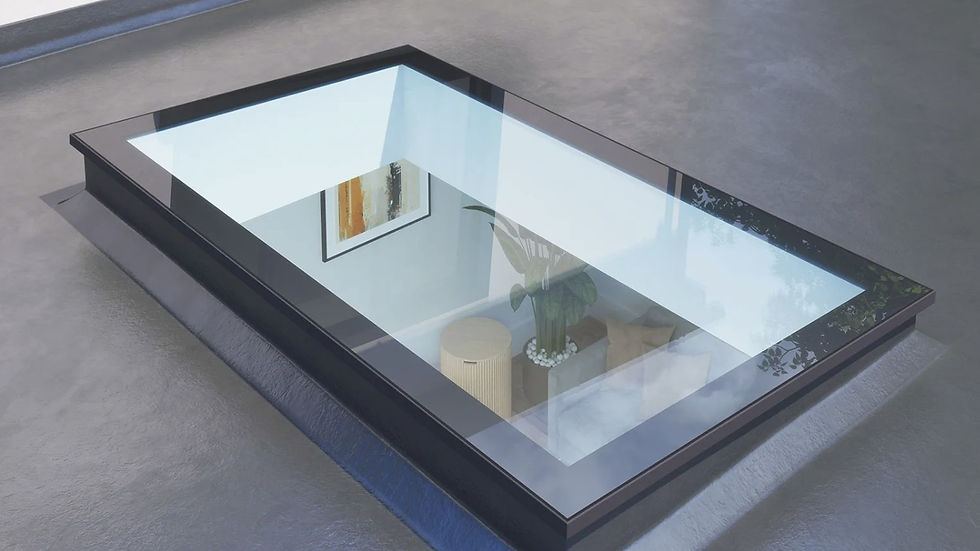
A flat rooflight sits flush or near-flush within the roof surface.
Neither option is inherently “better.” The right choice depends on the roof, the room below, and what you want the space to feel like day to day.
When a Roof Lantern Makes Sense
Roof lanterns are often chosen when light needs to travel further into the room or when the lantern itself is part of the design. They tend to work best in the following scenarios:
The room below is large or open-plan.
There’s enough roof area to accommodate the lantern comfortably.
Ceiling height allows the lantern to be visually appreciated.
The extension is intended to feel architectural rather than minimal.
Because lanterns introduce vertical glazing, they can help pull light deeper into the space, especially in kitchen-diner extensions. Systems like Korniche roof lanterns are purpose-designed for flat roofs, which helps keep internal sightlines slim without relying on heavy framing.

When a Flat Rooflight is the Better Option
Flat rooflights are often chosen for cleaner lines and a more understated finish. They’re usually the better choice when:
The extension has a lower ceiling height.
Planning restrictions limit roof features.
You want light without visual dominance.
The design prioritises simplicity and minimalism.
Flat rooflights also work well in narrower rooms or spaces where the light opening needs to be carefully controlled.

Performance Isn’t Just About the Glass
It’s easy to compare lanterns and rooflights purely on glass specifications, but that only tells part of the story. What really matters is:
How the frame is thermally broken.
How the unit interfaces with the roof build-up.
How loads are transferred into the structure.
How seals perform after years of movement.
Both lanterns and flat rooflights are systems, not just pieces of glass dropped into a hole. Poor detailing at this stage is where most long-term issues begin.
Installation Considerations That Often Get Overlooked
From an installation perspective:
Roof lanterns require more structural planning but offer visual impact.
Flat rooflights are simpler to integrate but demand precise detailing.
Neither option should rely on excessive sealant or on-site modification. Well-designed systems are engineered to install predictably, regardless of who fits them.
Which Should You Choose?
As a general rule:
Choose a roof lantern if architectural presence and light spread are priorities.
Choose a flat rooflight if clean lines and restraint matter more.
The right answer often becomes clear once you properly consider ceiling height, roof structure, and room layout.
Understanding the Impact of Your Choice
The choice between a roof lantern and a flat rooflight can significantly impact the overall feel of your extension. A roof lantern can create a sense of grandeur, while a flat rooflight offers a more subtle approach. Think about how you want the space to feel and function.
For example, if you envision a bright, airy kitchen that feels open and inviting, a roof lantern might be the way to go. On the other hand, if you prefer a minimalist design that blends seamlessly with the ceiling, a flat rooflight could be your best bet.
Final Thoughts
Most problems with roof glazing don’t come from the product itself; they arise from choosing the wrong solution for the space. That’s why getting advice before committing is crucial. At The Plastics Shed, roof lanterns and flat rooflights are supplied with guidance based on real installations, not assumptions.
If you’re still weighing your options, understanding the difference now is far easier than correcting it later. Remember, the right choice can enhance your home’s beauty and functionality, making it a space you love to spend time in.
So, take your time, consider your options, and make the best choice for your unique needs. Happy building!

Comments